A new creation workspace
The planned workspace keeps creative content in focus, with a separate place for collaboration and publishing settings. These captures come from the latest interactive concept, rather than the downloadable demo.
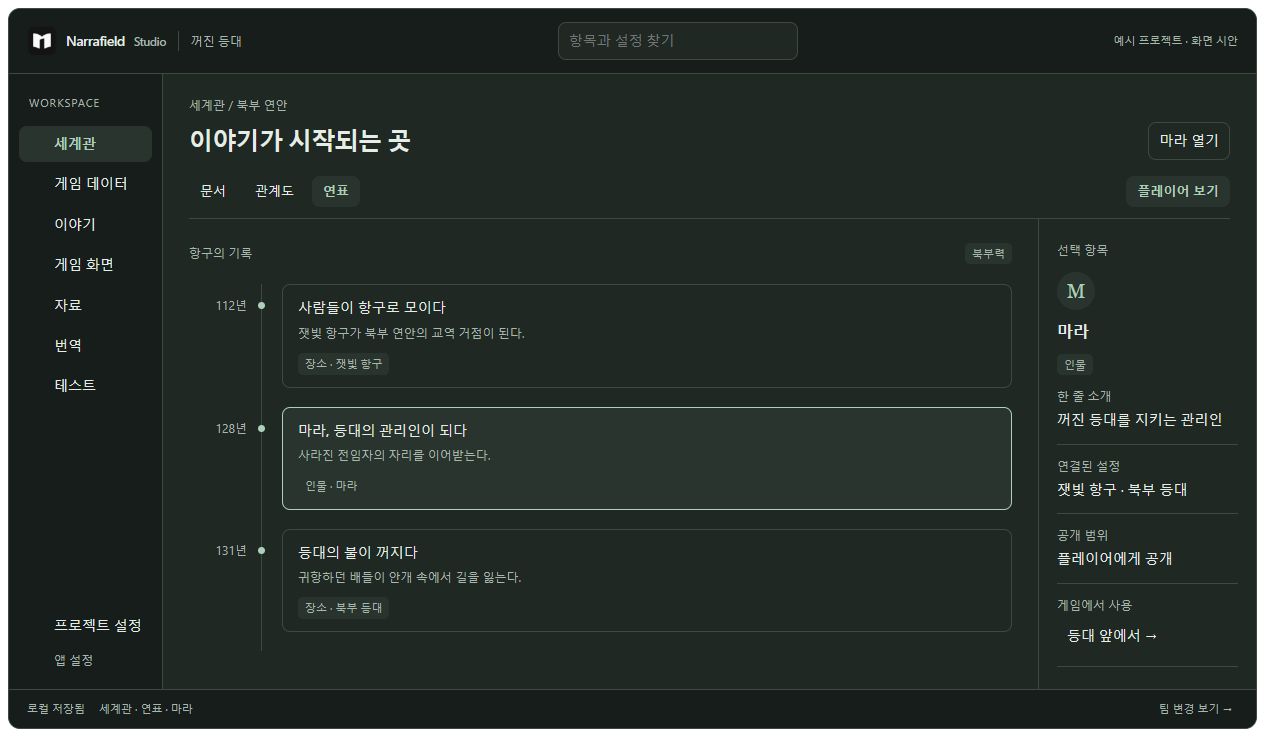
Find what you want to create
| Workspace | Content |
|---|---|
| World | People, places, factions, documents, relations, maps, and timelines |
| Game data | Characters, enemies, skills, spells, items, statuses, creation, party, and check rules |
| Story | Scenes, dialogue, quests, reusable events, and campaigns |
| Game screens | Title, character creation, dialogue, sheets, inventory, and credits |
| Assets | Images, audio, fonts, and attribution |
| Translation | Korean and English content and review status |
| Testing | Play previews, rule checks, and multiple participant viewpoints |
The design reuses a record across views instead of requiring repeated entry. A visibility switch helps review what players can see. The interactive concept does not implement every planned view or campaign feature.
Separate project and app settings
Project settings cover game identity, modules, version control, plugins, online operations, language policy, and publishing. App settings cover personal themes, text size, shortcuts, connected accounts, and local tools. Shared project settings should not replace personal accounts or display preferences.
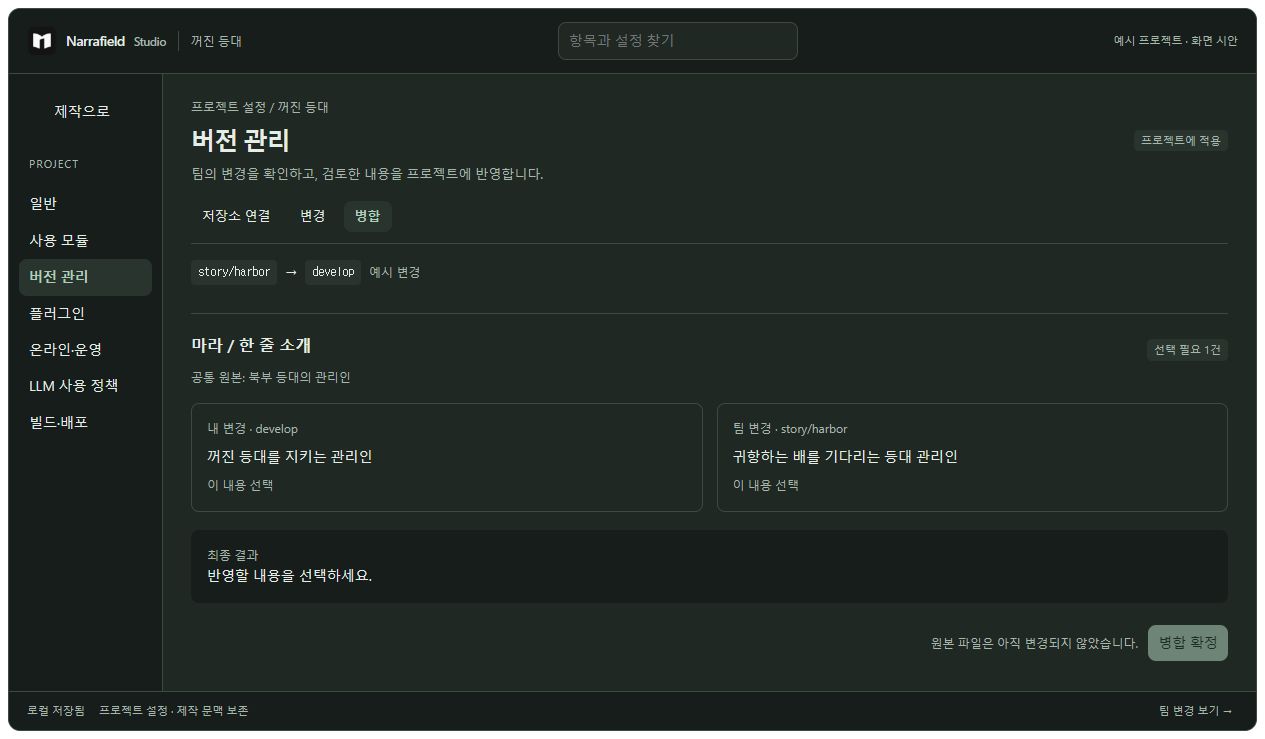
Saving, committing, and sharing remotely remain distinct actions. The planned merge flow compares the common base, local edits, team edits, and final result before validation. The concept’s merge controls only change sample state; they do not connect to a repository.
Choose the depth of editing
- Guided: start with a template and a short sequence of steps.
- Composed: connect conditions, effects, costs, and widgets.
- Direct: edit the detailed definitions behind the same data.
These are editing approaches, not separate project formats. LLM assistance remains optional, with proposals reviewed before application.
Where to work in the current demo
The demo uses top-level tabs. World, Relations, Maps, and Timeline have separate tabs; Git lives in Tools & extensions / Merge & conflicts, and display preferences live in App settings. The new sidebar and unified project settings are planned.
Current editor menus · Game-screen design · Git collaboration