Game screens and customization
Players should see the story and their next action. Creators need a separate workspace for composing that experience. The Dark Lighthouse concepts explore both sides.
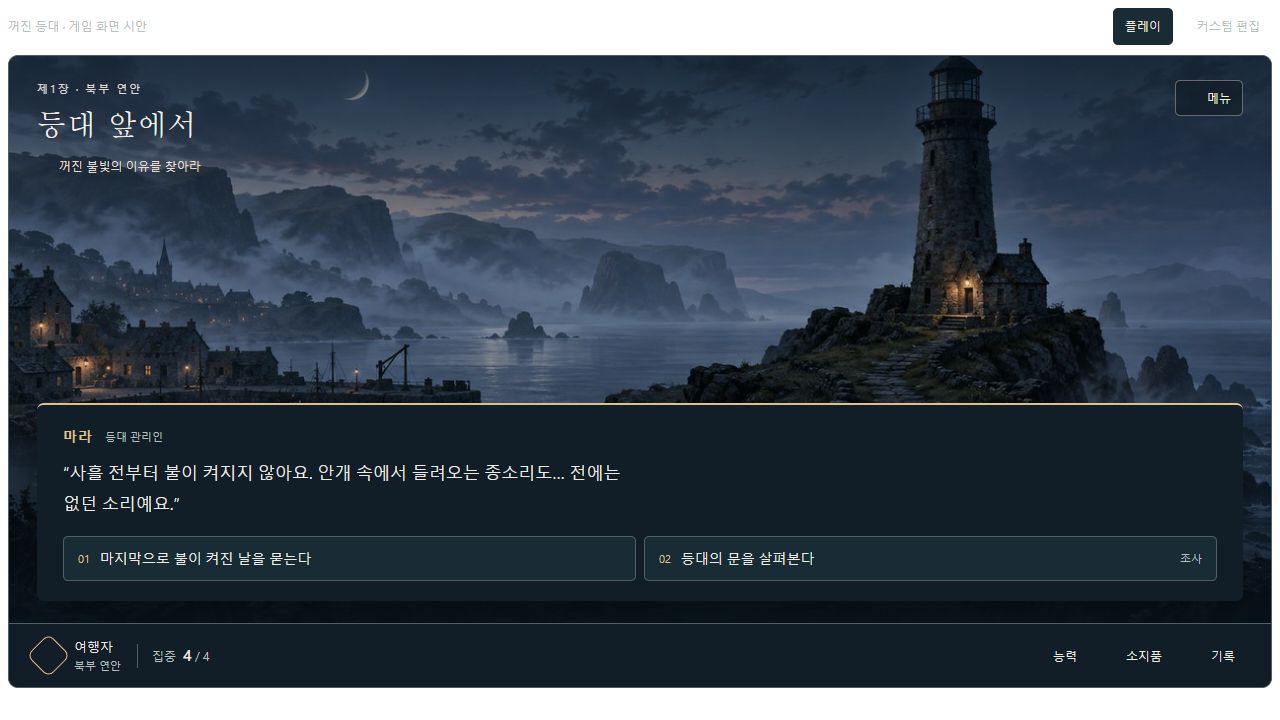
The player’s screen
Location and objectives sit above the scene; speaker, dialogue, and choices form a readable area below. Abilities, inventory, journal, map, and character sheets open on demand. Closing them returns to the scene. Games without HP or MP should not display empty resource bars.
Exploration, conversation, checks, combat, and another player’s turn call for different information. Online actions should distinguish processing, approval, result lookup, confirmation, and reselection. Success effects should follow confirmed results.
This scene view is not the game’s initial entry point. The planned flow is Title → New game / Load → Required preparation → Play. See Starting a game and character creation.
The creator’s screen editor
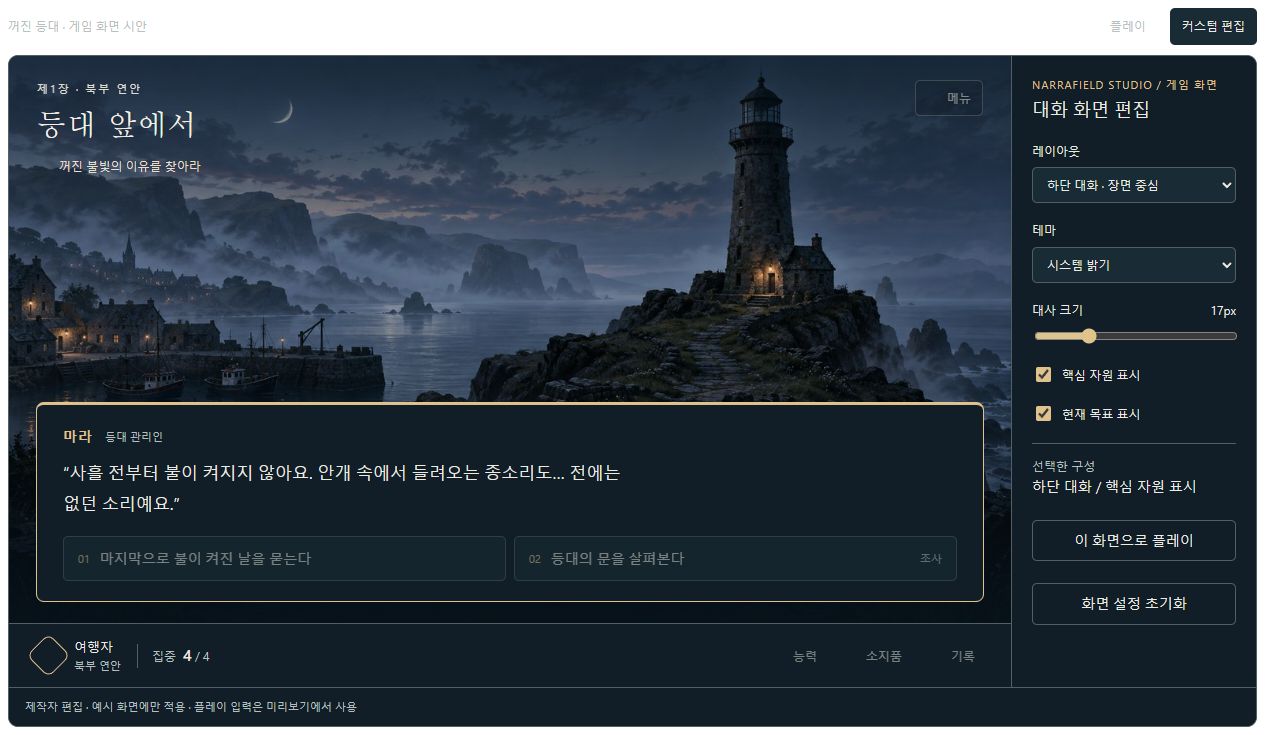
| Area | Planned controls |
|---|---|
| Screen template | Text-led, cinematic, or tactical starting layouts |
| Layout and widgets | Dialogue, choices, objectives, resources, sheets, inventory, and menus |
| Theme | Colors, fonts, backgrounds, spacing, and reduced-motion alternatives |
| Data binding | Connect widgets to public names, values, objectives, and actions |
| Context | Adapt to exploration, combat, waiting, and reconnection |
The planned editor lives in Game screens, including title, character creation, game information, and credits. Free placement, complete binding tools, screen-pack sharing, and export integration are not implemented by this limited concept.
Creator controls and player preferences
Creators define the game’s layout and theme. Players use the text, input, audio, and motion preferences that the game provides. Display preferences do not change game rules or grant access to hidden information.
Difference from the current demo
The demo supports scene backgrounds, portraits, choices, abilities, items, and saves. Its current menu and information-panel interface is covered in Play and export. The scene-focused design and general screen composer above remain planned features.